The Brochure Website Problem
Most business websites follow the same lazy pattern. Hero section. Company story. What you do. Why you're great. Team photos. Contact form. Done. It's basically a physical brochure flattened into HTML. And it converts like a brochure sits on a desk. Ignored.
The problem isn't what you're showing. It's what you're not answering. When a prospect lands on your site, they have questions. Is this for me? Can they actually solve my specific problem? How do I know they won't waste my time? What does this cost? What's the real difference versus their competitor? A brochure site answers none of these. It just talks about itself.
Here's the fundamental mismatch. A prospect doesn't care who you are. They care if you can fix what's broken in their business. A brochure wastes space on company background. A conversion engine answers the question that brought them to your site in the first place.
Messaging Hierarchy: Hero Copy That Actually Works
Your hero section needs to prove you understand the prospect's problem in the first 3 seconds. Not your tagline. Not your company name. The thing they're frustrated about. The status quo that costs them money or time or sleepless nights. State it clearly. Then show how you're different.
Bad example: "We're a leading marketing agency." Meaningless. Every agency says this. A prospect has no reason to keep reading.
Better: "Most companies hire agencies and get prettier marketing. You need sales. That's the difference." Specific. Takes a position. Tells the prospect whether they should care.
The hero copy isn't about you. It's about them knowing you get it. After that initial hook, explain the approach. Not features. The philosophy. Why you work the way you work. Then proof. Then next step. The flow goes: problem, philosophy, proof, action. Not company, then maybe product, then hope they call.
Most sites get this backwards. They open with "About Us" instead of opening with "Here's Why You're Here."
Strategic CTAs: Where Friction Lives
Brochure sites scatter CTAs randomly. "Contact us" appears five times. "Learn more" buttons go nowhere useful. It assumes the prospect will do the thinking work of finding what they need next.
Conversion sites place CTAs where friction actually exists. A prospect reads about your process. They think "I want to see if this works for our type of business." The CTA right there says "See case studies" not "Get in touch." A prospect is skeptical about price. Before that doubt grows, there's a CTA for pricing. A prospect wants to know about onboarding. There's a CTA that leads to onboarding details, not a generic contact form.
The rule: Every CTA answers the question the prospect is having at that exact moment. Not the question you wish they'd have. The one they actually have.
And the button text matters. "Submit" is dead. "See if you qualify" is alive. "Book a call" works. "Let's connect" doesn't. Use the same language your prospects use, not marketing speak.
Social Proof Placement: When Doubt Peaks
Brochure sites put testimonials and logos in a section. Conversion sites put social proof exactly where skepticism lives. A prospect reads about your investment. Skepticism peaks. Then a case study showing ROI appears. They see an objection coming. Before they close the tab, three client testimonials about that specific concern load in. Friction dissolves.
Don't cluster all social proof in one area. Thread it through the entire site. Hero says the benefit. Skepticism rises. Proof appears. New concern emerges. Different proof addresses it. By the time they reach the CTA, they've already been convinced four different ways.
The specific details matter too. "Great company to work with" is noise. "Cut our CAC by 40% in six months" is proof. "Five-star reviews" is a paragraph. Actual metrics are a conversion. Show numbers, timelines, and specific outcomes whenever possible.
Page Flow Psychology: The Hidden Architecture
Brochure sites let visitors bounce around randomly. Homepage to About to Services to Contact. No thought. Conversion sites guide you down a path. Each section removes one doubt. Answers one question. Moves the prospect one step closer to action. By design.
The flow works like this: awareness (do they know this problem is solvable?), consideration (could this approach work for us?), decision (should we talk to these people?). Your page sections should follow that sequence. If you jump around, you reset trust.
Mobile breaks this architecture for most sites. Visitors on phones can't see the full picture. They scroll endlessly. Brochure sites ignore this. Conversion sites build for how people actually browse on mobile. Shorter sections. Snappier copy. CTAs closer together. The same story, adapted for a 5-inch screen.
Test this on your own site. Close your eyes. Open it fresh. Can you answer these in 15 seconds without scrolling? What problem does this solve? Why does their approach work? Should I keep reading or leave? If the answer's no to any of those, your flow needs work.
Bad vs. Good: Side by Side
A brochure site says: "We've been in business since 1998. We offer web design, marketing, and consulting. Our team has 50 years of combined experience. Let's talk."
A conversion site says: "Most web redesigns fail because they're built by designers who don't understand sales. We design every pixel to move prospects closer to buying. That's why our clients see a 34% increase in qualified leads within 90 days. Here's how we do it." Then it shows the approach. Then proof. Then "See if we're a fit for your business."
One assumes the prospect will figure out why they should care. One tells them. One is a brochure. One is a business tool.
Brochure vs. Engine
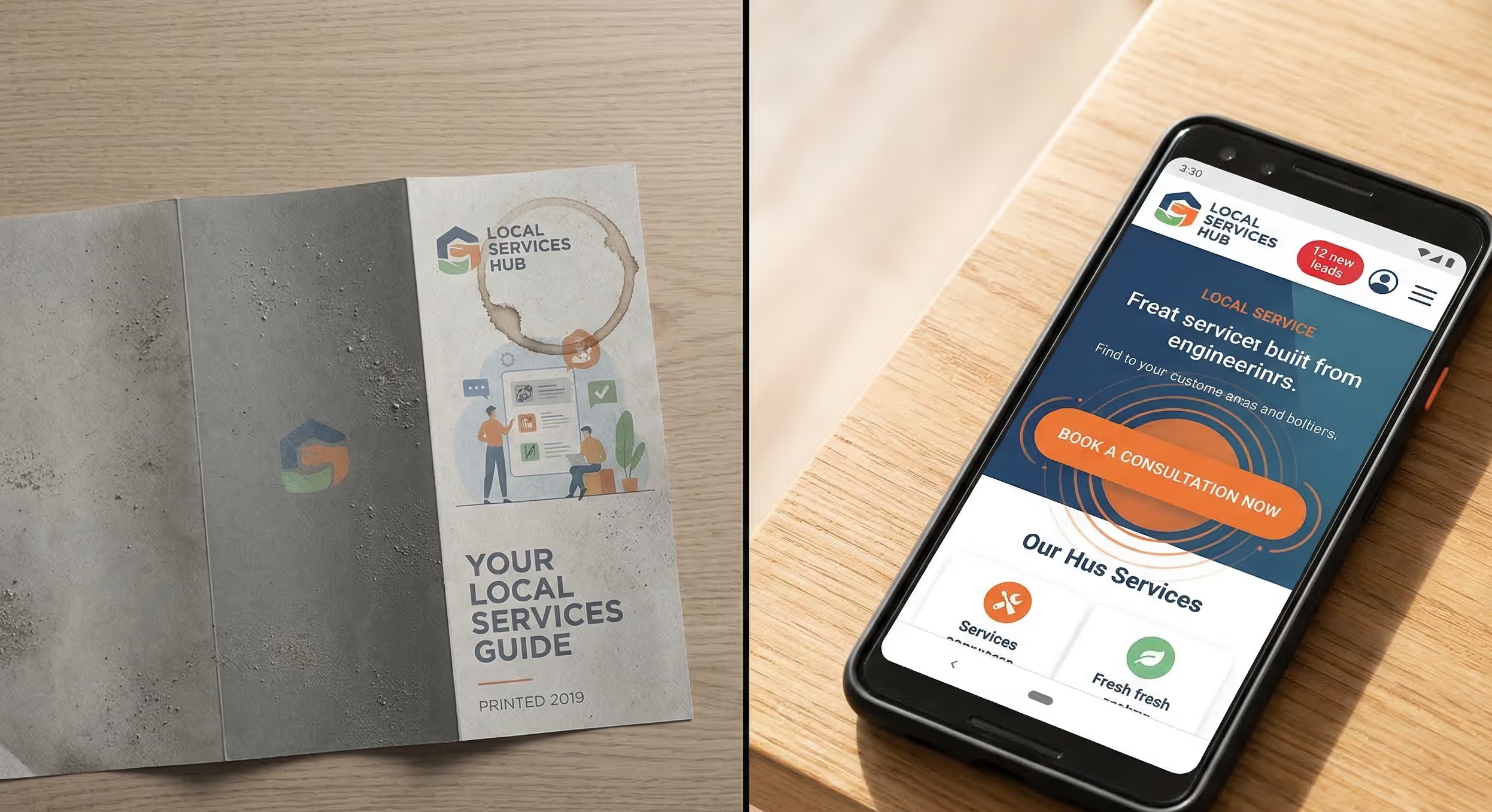
A brochure website costs time. Every visitor is a missed conversation. A missed lead. A visitor who leaves more confused than when they arrived. You built something that tells your story instead of solving the prospect's problem. That's backward.
A conversion engine costs money upfront. Positioning work. Message testing. Page architecture. Smart CTAs. Proof placement. It's deliberate. It's not beautiful for beauty's sake. It's built to answer questions and move people forward.
The good news. You don't rebuild. You build once with intention. Then it keeps working. Every visitor sees a site that understands their problem. Answers their concerns. Tells them exactly what to do next. No guessing. No generic messaging. No hope that they'll somehow figure it out.
Stop treating your website like a brochure. Start treating it like the most important sales tool you own. That's the difference between activity and conversion.